

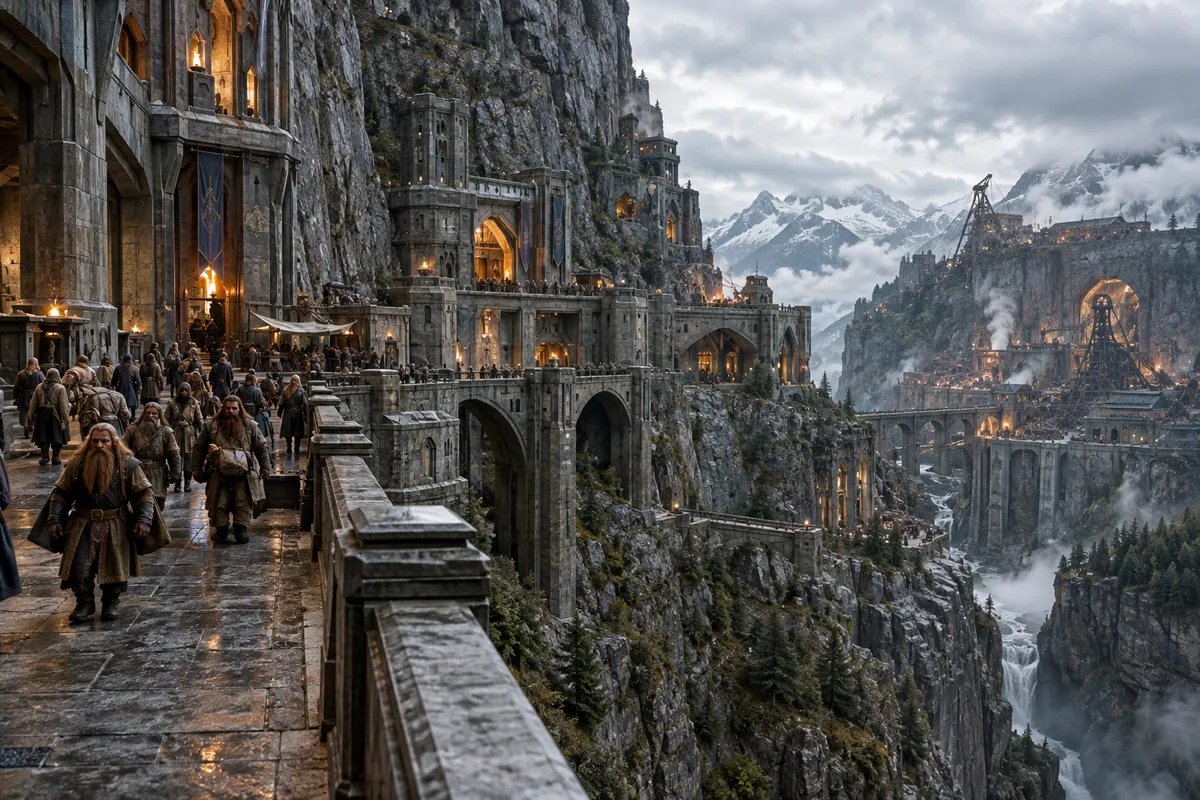
At the Seven Arches crossing above the east ravine, Teren Bel keeps the second reading file beside a pale repair seam beneath the fourth arch, visible from the lower path. The two details are easy to miss in a summary: one is a line in a ledger, the other is the condition that decides whether the line is useful.
Teren Bel is the bridge inspector for the upper road. On this long light visit, the work begins with the stone-load register and the night watch’s closure notices; only after the entry is checked can the crew say what the rule asks of the people below.
34 loaded crossings were entered this cycle, compared with 37 in the prior file. The figure is one part of a longer handoff. Tavi Orr checked the stone-load register and the night watch’s closure notices against the field notes. The method is to trace a system from its control gate to the last household it is meant to serve; it confirms the entries, but not every interpretation attached to them.
The inspector’s limit protects the oldest span; carriers say the alternate route adds a full stair and a second toll. The current record does not settle that disagreement. Residents closest to the work describe the difference as a route, a wait or a shift that cannot be moved on a slate. Their accounts have been attached to the docket rather than folded into the total.
A field check has compared the written rule with the place where it is used. The entry belongs to the second reading file at the Seven Arches crossing above the east ravine. The masons will place a temporary measure stone before authorizing the next heavy load. The next visit will show whether the revision travels beyond the office that wrote it.
